A browser kingdom-builder set in the trading empires of historical Africa. Claim hexes on a fogged map, raise cities in mudbrick and granite, and staff every building with real people — because in this game labour is the scarce resource. Then run the caravans, set the terms, and hold the routes that carry gold, salt, ivory, kola and indigo.
Five ages, five ways to build
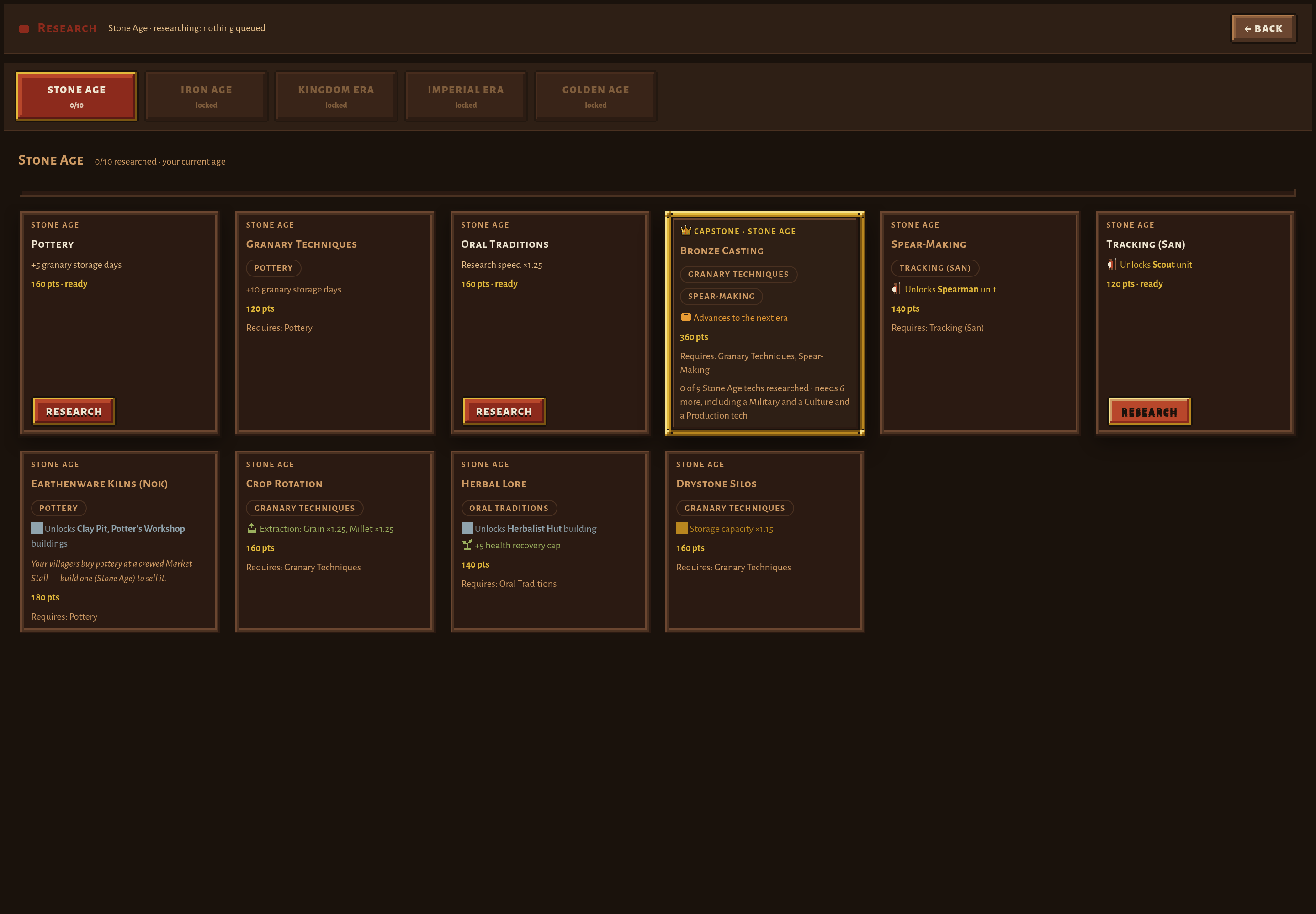
Research carries a kingdom from packed earth to gilded stone. Each age changes what you can raise, and the buildings look like the age that built them.

Stone Age
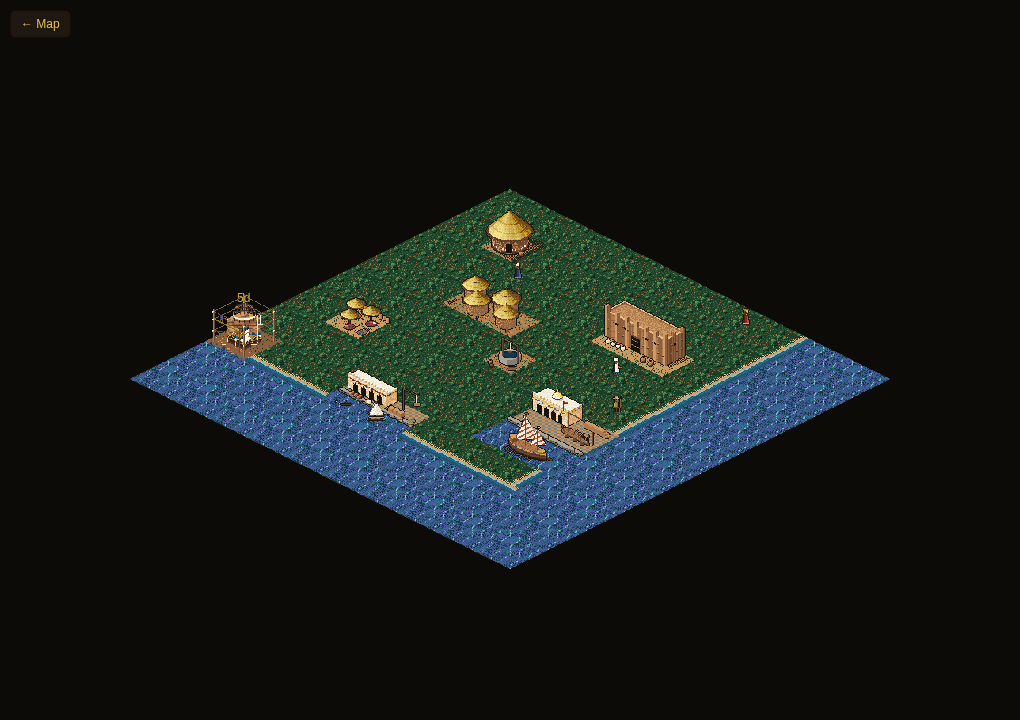
Thatch and timber — packed earth, woven fence, the first granary you dare not lose.
Thatched hut · palisade · granary · well · watchtower · market stall
Iron Age
Mudbrick and adobe — sculpted mass, toron beams, the first monumental weight.
Smelter · tannery · salt works · warehouse · barracks · gold mine
Kingdom Era
Mortarless granite — coursed drystone, conical towers, walled compounds fitted without mortar.
Caravanserai · royal palace · mint · scriptorium · weaver's house
Imperial Era
Plaster and minaret — the trade-empire apex; architecture of commerce and of learning.
Grand temple · harbor · university · war college · saddlery
Golden Age
Gilded stone — the trans-continental hub, at the scale the routes finally justify.
Grand bazaar · grand citadel · great library · naval yard · treasuryFour things, all of them yours to get wrong
Settle what you can hold
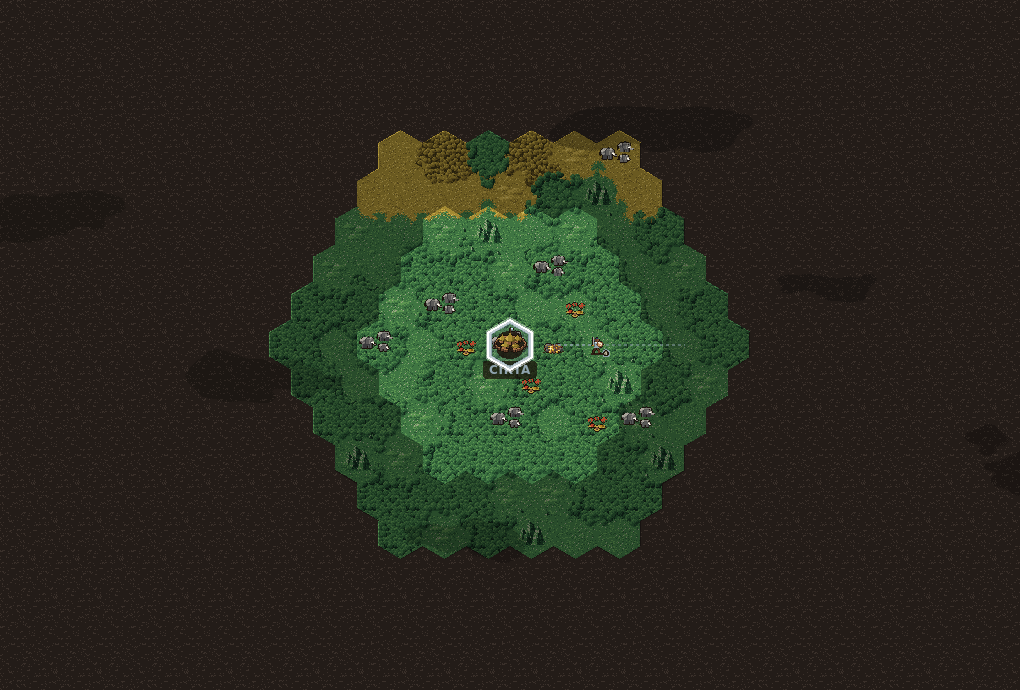
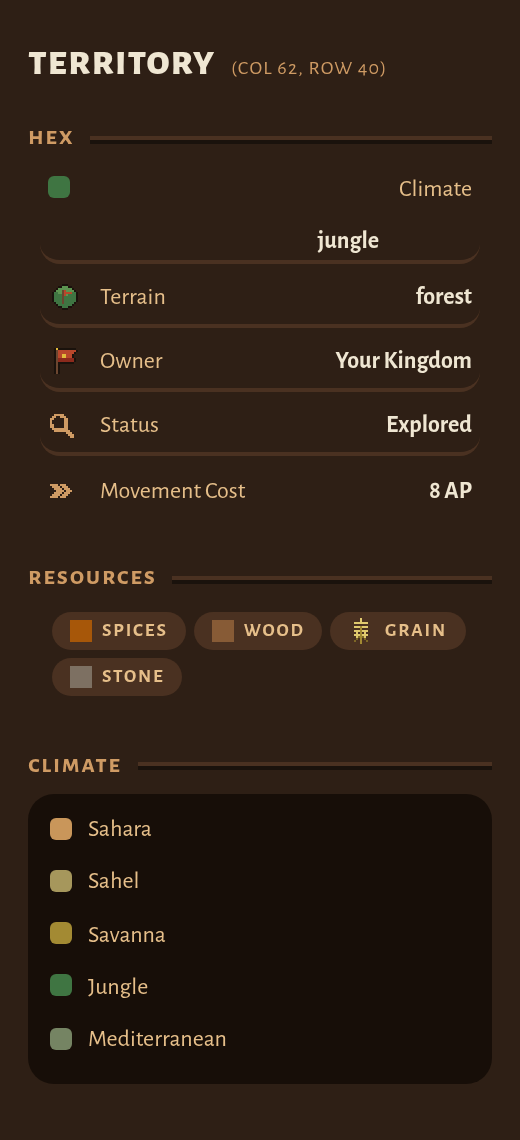
The overworld is a fogged hex map. You claim tiles, send settler parties, and found cities on the ground worth having — deposits, water, a route that other people need. Your territory is traced as one continuous band, so a glance tells you whose border you are standing on.
Settling is blocked while a foreign army stands on the hex, and the button says so before you tap it.
Staff every building yourself
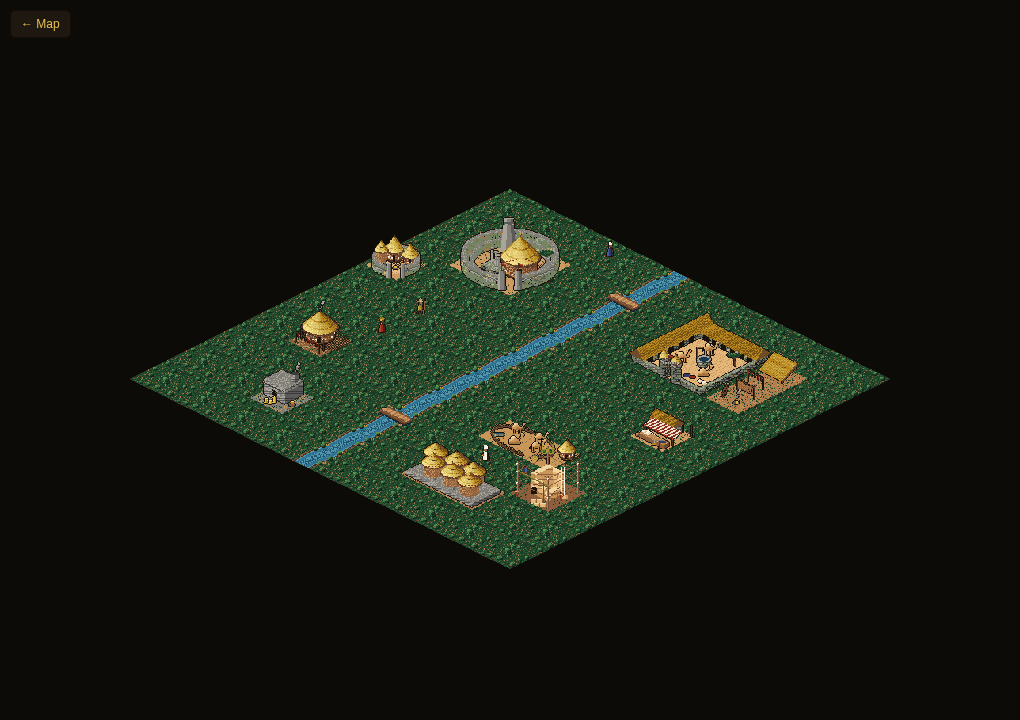
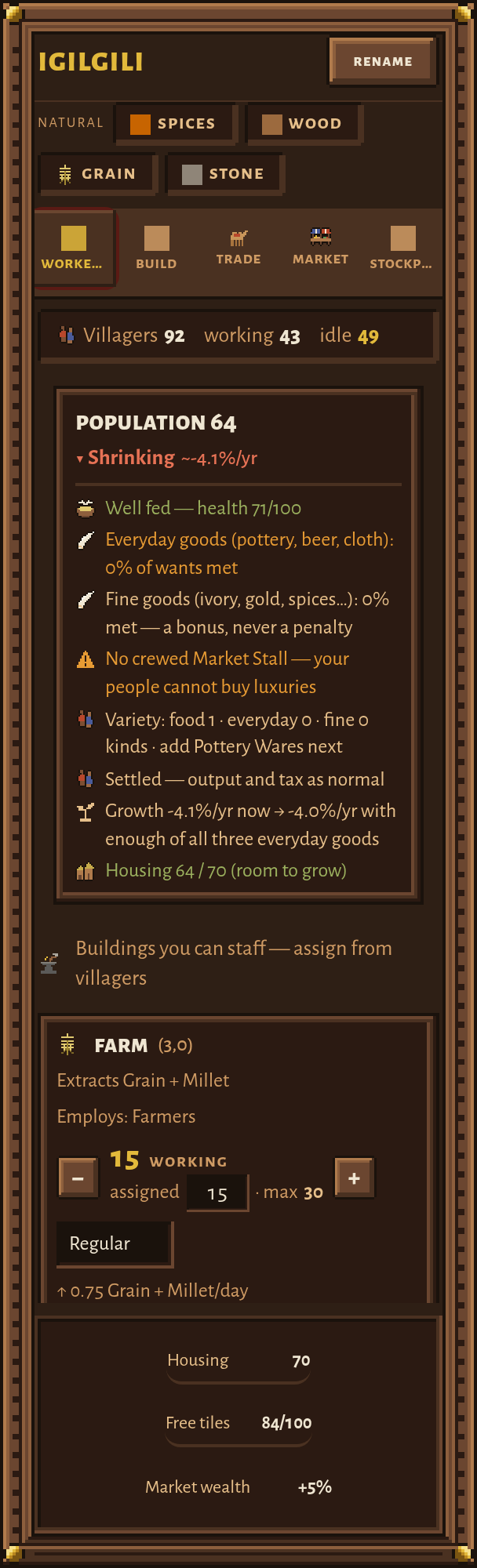
Nothing is produced by a number. Every unit of grain, iron and cloth comes from a person standing in a building, walking there from the housing you built. Understaff a smelter and it simply does less; overstaff a farm and someone else goes idle.
The city readout shows workers actually on site against workers ordered — a farm you staffed this morning may still be walking.
Trade on terms you set
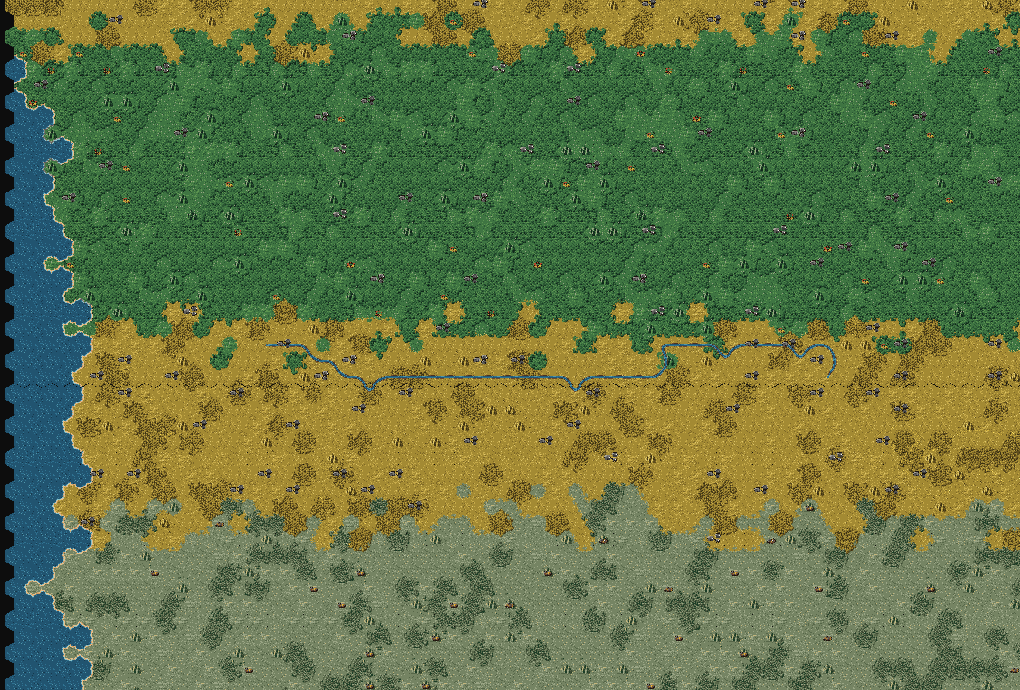
Caravan routes carry a resource, a daily volume, a reserve the origin city keeps for itself, and as many guards as you care to post. Feeding a distant ally can no longer quietly starve the city doing the feeding, and a guarded route is drawn with a shield.
Guards cost half upkeep while posted. Underfund the garrison and it thins out through desertion.
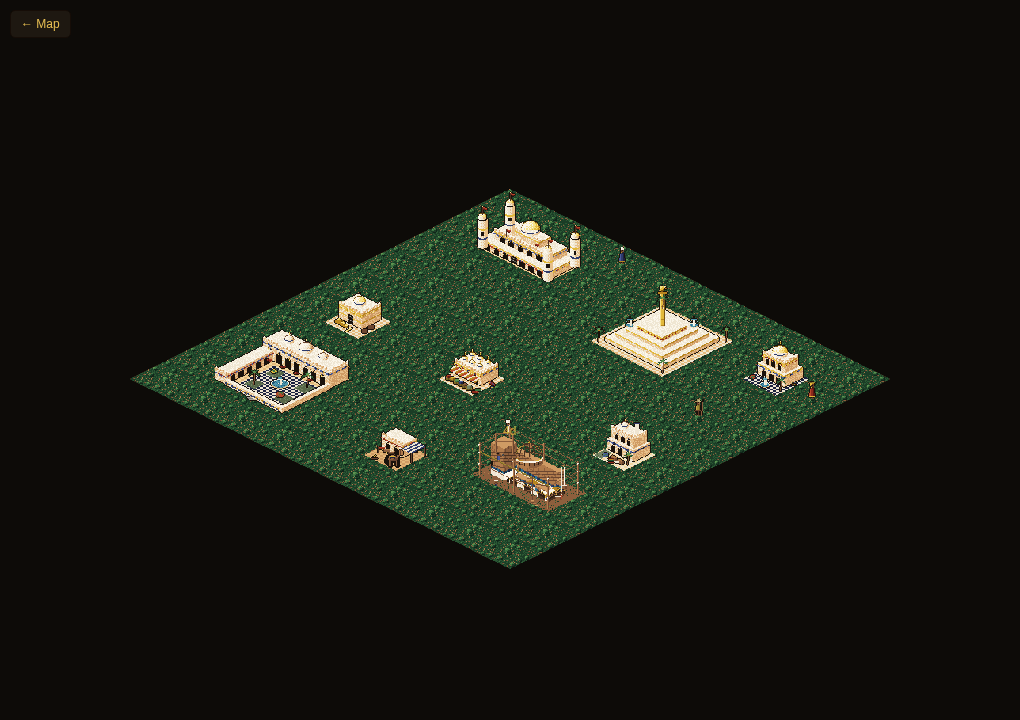
Sign, or fight
You only see kingdoms you have actually met — by scouting their territory or by an envoy reaching you. Treaties, rights of passage, research pacts and vassalage all go through the diplomacy table, with a written note attached to the offer if you want one.
War closes the table: no trade agreements or alliances with a kingdom you are at war with. Peace and vassalage still go through.
Screenshots, unretouched
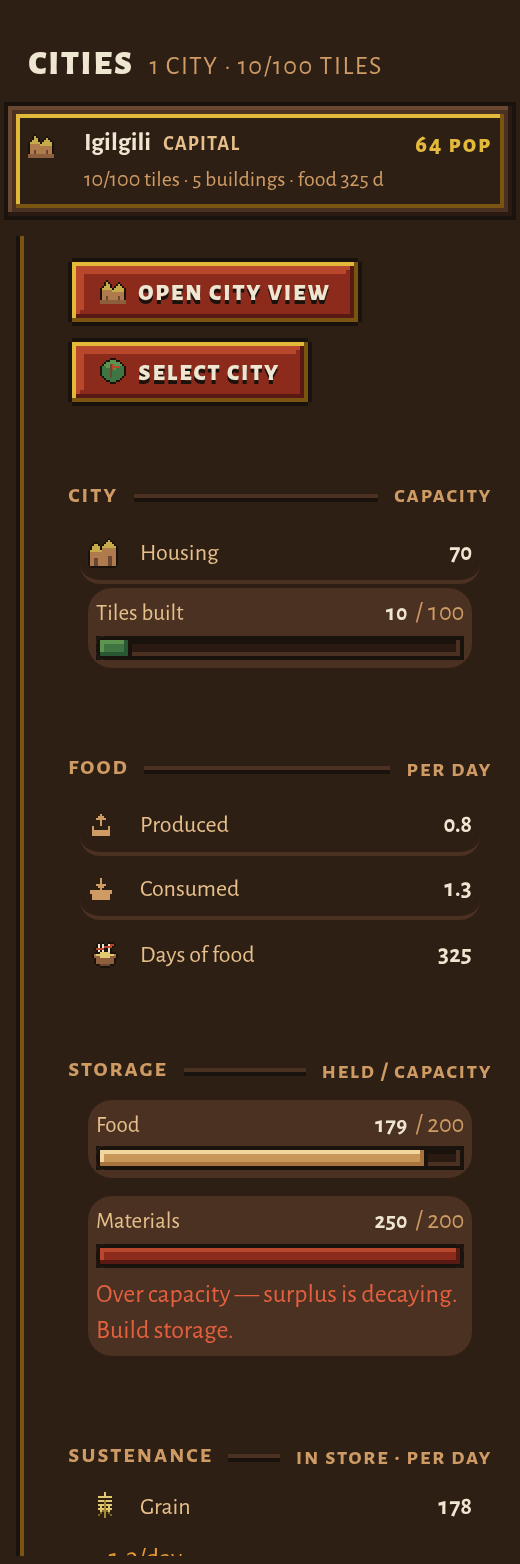
These are captures of the game as it plays today, taken from the current build and not touched up. The city art is early and the map is plainer than it will be. The simulation underneath is thirty-six rulesets deep, and that is the part these plates are meant to show.
Up to a hundred kingdoms to a world. One is crowned.
Worlds run in real time and keep their ruleset for life. Pick your colour, name your kingdom, and place your first tile — it takes about a minute, and there is nothing to download.
Found your kingdom